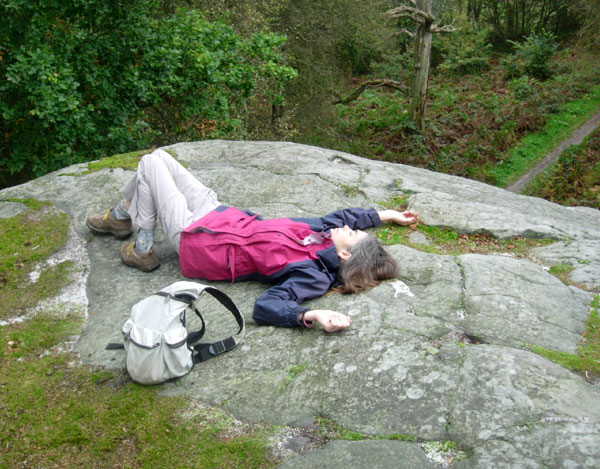
I am yearning for the land. Hearing the wind outside it is not exactly inviting but I feel a pull, a need to connect with layers beneath me feet – rock, sand, mud, grass, the earth’s bone against my bone.
Over the past few years I’ve been moving outdoors, relating to the natural environment through movement – as I did in a workshop, River Women, earlier this year. In the last year or so I have tried to make a short video, a movement video. It is about the earth, about woods and the sea. I felt a bit lost during the filming and was going to call it “What have I lost on the path?” a phrase I remember writing and illustrating in my diary many years ago. I felt that I had lost something on the path – in the earth – and the film was about acknowledging this. Originally the video was going to be a filmpoem – a film of a poem – but I’m no poet so I decided to keep it simple and see what would arise. I can’t dance or move very well either, but it’s just an experiment :)
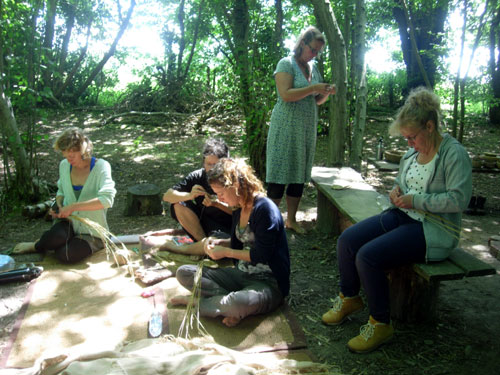
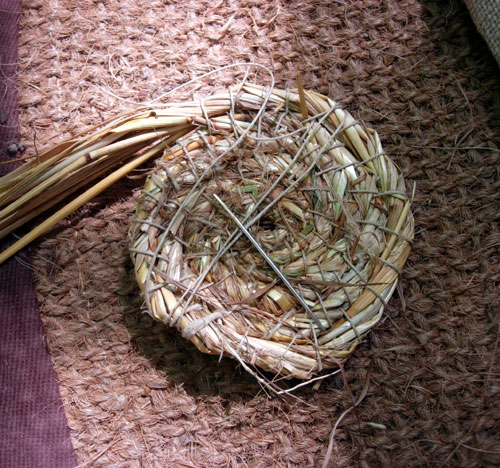
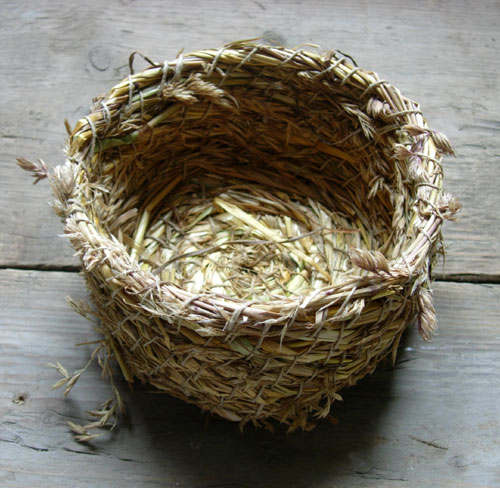
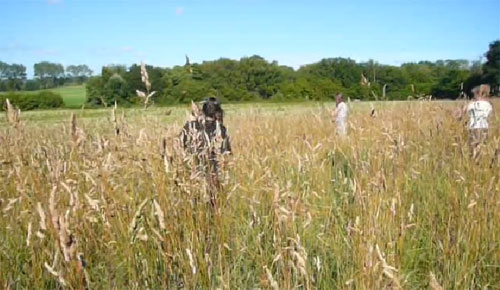
At the weekend I did a grass baskets workshop with Ruby Taylor of Native Hands. I have wanted to connect to nature by making something and using my hands. The closest I’ve got so far is making a moss journal. The workshop took place at Wowo campsite in a special campfire area in the woods. First we cut handfulls of grass in an adjacent field, golden and maroon sheeves we carried to the workshop site. After tea, Ruby took us through a few minutes of opening up the senses to the natural world around us. She lit a fire with metal and flint, to have a constant supply of tea throughout the day.
As Ruby pointed out, baskets can be like nests and she brought out a box containing a beautiful nest with a couple of thrush eggshells within it. Birds are the ultimate artisans.
When I was younger, I used to collect nests, empty ones. I climbed trees like many children, fascinated by being up high in the leaves with a birds-eye view. I came across the occasional nest and if it was empty, I’d bring it down if I could. I grew a stash of nests in my bedroom. Unfortunately birds nests harbour fleas so my collection didn’t last for very long.
Stumbling on a bird’s nest as a child, I was breathtaken. I gasped at the tenderness of it, the downy feathers, softer than my fingers, moss folded into grasses and twigs in rounds. My eyes circled and circled it, caught by the mesmerizing perfection of the nest. It was the shape of my dream, to be tucked inside a nest and to know it for home.
A nest is a circle of infinite intimacy, a field-hearth or hedge-hearth. Every nest whispers ‘home’, whether you speak English, Spanish, Wren or Robin. Part of a child’s world-nesting need is answered seeing a rabbit warren, a badger sett or otter holt, as children’s writers instinctively know, giving children a secret passage to dens, nests and burrows.
Through nests, a child’s own hearthness is deepened and the child grows outwardly and inwardly into its world. Outwardly, children stare at a nest, fascinated. Inwardly, the nest reflects not just the body’s home but the mind’s. In the snug refuge of the nest, the psyche fills itself out from within, as round and endless as a nest, creating its infinite-thoughted worlds. Intertwined with the world of fur and feather is the world of metaphor where mind makes its nests. Metaphor weaves ‘grass’ and ‘shelter’ together. It ties ‘twig’ to ‘refuge.’ It knits ‘moss’ to ‘home.’
Finding a nest is a homecoming for a child. In Greek, homecoming is nostos, the root of the word ‘nostalgia’—an ache for home, a longing for belonging. Children, filthy little Romantics that they are, have an uncanny gift for nostalgia in nature; something inchoate, yes, but yearning, yearning for their deepest dwelling.
She also has some interesting essays about home as part of the Stay Where You Are project. I never outgrew my fascination with nests, eggs, found animal skulls. I still collect such things when I find them.
Throughout our time in the woods, we heard a persistant blackcap – or at least I think it was a blackcap, blackcaps can sound very similar to garden warblers. A few years ago I spent a few days watching and recording a blackcap singing in a nearby wood as a volunteer for The Woodland Trust, so I am quite familiar with its song. Blackcaps have a lovely, flutey, scratchy song. Here is my recording:
Blue tit, tree creeper, bullfinch;
fallen acorns and the dry crunch of dwarf oak leaves;
scent of lemon and lavender as I wade through cloud fields
flower husks, the dry, deadhead suns of Autumn,
burnished mists, soft on the gaze.
A cricket zips past with a flash of blue sky in its wings;
a praying mantis strikes a combative pose on the path, quizical, as I walk past lonely ruins,
rocks that could be sacred.
And above me, vultures caress the currents and gather on the pink-grey vulture rock of vulture cliff.
What is the land saying?
It sloughs off Summer insignificantly,
in layers and earth warming browns,
in shards and bones,
in dry, bone trees in skeletal stances,
twisted and rattling,
abrasive and catching at my trousers.
Birds flit from tree to tree,
tick tick, tack, tack…
browns, honey, straw colours, beiges…
Even the snake wears beige.
In this basin of rock outcrops,
place of layers and silence,
shades of blue fade to more watery, distant, blues,
a valley of liquid air,
a valley I fall into with my gaze,
that I could almost swim into if I reached out…
I am the cliff,
I am the vulture,
I swim the valley and push to fly;
I am the knarled tree,
the scissoring cricket,
the lizard’s liquid escape,
the overarching sky.
This is becoming another year of trees for me – and for others too. I came across a brief video about women and trees made by Megan Hollingsworth. Megan is the creator of Extinction Witness. She is a poet, writer, dancer, mother and compassion activist. She feels passionately about stopping the destruction of large forest trees and has set out to create a seven minute film that explores this destruction and how it relates to her healing journey following childhood incest.
“VIRGIN is a 7-minute film that tells the stories of grandfather tree, a giant sequoia cut for show in 1853, and a woman healing from early childhood incest in 2013. The film uses poetry in the form of spoken word, dance, imagery, and song to weave these stories through to the roots of violence toward all that shines with grace.”
To help fund the production of the film VIRGIN and find out more go here.
I have been working on my own mini video that involves trees, woods and movement. Coming soon!
I stumbled on this inspiring film, Falling, directed and performed by Ayelen Liberona. It explores the natural world combining forest, water and dance in a strange and interesting way :)
Progress is slow on the art front. I’m continuing with my goddess book and every-so-often get drawn to doing a painting or two. While researching occasionally I stumble on an artist, poem or film that resonates with me. So I thought I’d share a few artists and other inspirations that make me feel encouraged to work more expansively.
Firstly I’ve chosen this video clip of Ariel from the film, The Tempest. It aludes to a liminal, spirit world just out of sight, beside the shore, through woodland trees on an island. A haunting, beautiful realm of magic and spirit. Ariel, male or female or both, resides there in this realm. I like the description of him that accompanies the video clip:
“the embodiment in spirit of human emotion, vulnerability and compassion. He can transform his physical presence into essences of light, fire, wind and water, and the corporeal manifestation of harpies, frogs, stinging bees and bubbling lava”.
Freed from his/her imprisonment in a tree by Prospero, he/she is bound to serve the magician but yearns for freedom; (I can relate to that.)
Full fathom five thy father lies;
Of his bones are coral made;
Those are pearls that were his eyes;
Nothing of him that does fade,
But doth suffer a sea-change
Into something rich and strange.
Sea-nymphs hourly ring his knell:
Ding-dong,
Hark! Now I hear them – Ding-dong, bell.
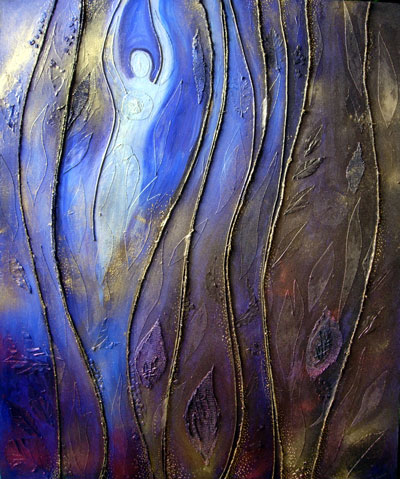
Ethereal, otherworldly, ghostlike, haunting, with nature and water – all ingredients that moved me to paint my Siren picture a few years ago.
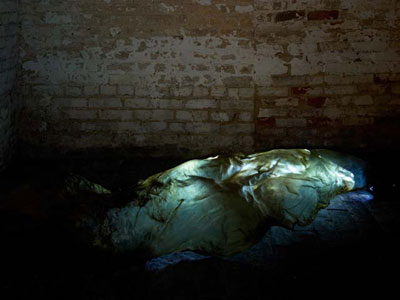
I’ve drawn on my Siren painting for my goddess Lethe of the River Hades, one of the six rivers of the Ancient Greek Underworld – a goddess of the liminal world. While researching for her, I stumbled on the an installation which was the result of a collaboration between the sculptor Rosalyn Driscoll and the film-maker Tereza Stehlikova called “Rivers of Hades: Forgetfulness (Lethe)”. Both artists were exploring perception and synesthesia. (Synesthesia is something I’m fascinated by … hearing colours, seeing sounds, the blurring of the senses.)
I like the description and photos of the installation, how it is about a viseral relationship with nature, memories, feelings and dreams. It is made of translucent rawhide giving it an organic, animal quality and the colours of twilight. It is sculpted in such a way as to suggest water caught in time or a body in water with video images projected on or through it, representative of memories, dreams, the otherworldly, hauntings, ghosts and death. This is Lethe, a river which the dead must cross to forget their former lives, a River of Forgetfulness (like my River of Memory painting that I have painted before). Video images cross and blur boundaries and edges suggesting impermanance and fragility. I would have liked to have seen the exhibition and the Sensory Worlds conference that staged it.
I have just seen a trailer for the film, “Midway” which has deeply moved me. It strikes a cord with me because it features albatrosses that remind me of the gulls on Havergate, but mainly because I feel terribly irresponsible at having contributed to the Mid-Atlantic gyre – my message in a bottle! I want to do what I can to promote this film and the issues it raises.
I read much about ecological and environmental problems and it all gets very depressing. Often I want to just switch off, it all seems so painful. The trailer to this film is about an environmental tragedy but it is both beautiful and poetic.
So much water this year, the news seems to be inundated with stories of floods and storm surges. Water is taking over, spilling over banks, uniting oceans, seas, rivers… and it is seeping into my art themes once again.
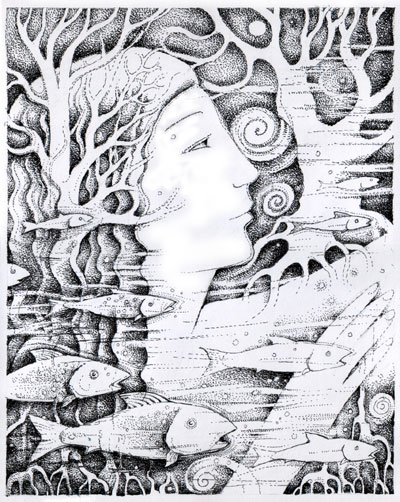
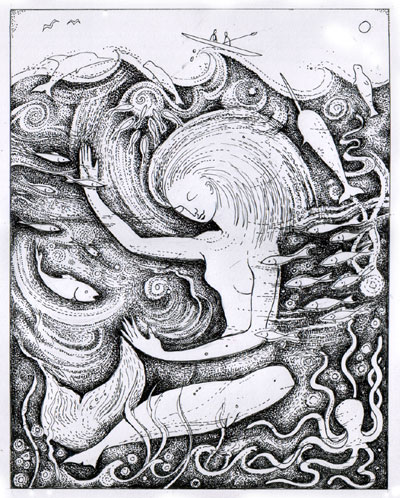
I am into pen and ink once again which takes me back to my days of doing many illustrations for the Brighton based organisation, RiverOcean. In those days my drawings were all about sea creatures and the sea. Well once again my pen and ink drawings are water related but drawn for a small book I’m writing on River, Sea and Moon Goddesses, a theme that I’m especially interested in… back to that underground river that flows beneath my life.
My illustrations here are of perhaps some lesser known goddesses. Take Ved’ava for example, a goddess of the sea or water spirit placated by fishermen of Finno-Ugric peoples. She is sometimes portrayed as a kind of mermaid with a fish tail, playing, singing and seducing humans. If a fishermen saw her it was not a good omen as she was believed to be a drowned person’s spirit.
Then here’s Vejama, or Yemoja, she has several names. A goddess of pregnant women and the River Ogun, a river in West Africa, but she is also a goddess with namesakes in other parts of the world. In Brazil, she is Queen of the Ocean and a goddess of fishermen and shipwreck survivors. She is a mother goddess, a fertlity goddess, a spirit of Moonlight too. I wanted to base my pen and ink illustration on the photo collage of my River Goddess, Moanna. I’m not sure it works, what do you think?
A better-known goddess is Sedna, or Nerrivik, goddess of sea creatures and the Underworld in Inuit mythology. There are various stories about Sedna but most tell of the chopping off of her fingers from which are created the seals, walruses, whales and other marine creatures the Inuit hunt. If angered she withholds the sealife from hunters in her undersea domain and it requires a shaman to metaphorically dive to find her at the bottom of the sea and brush the tangles from her hair to calm her. I am particularly inspired by Inuit culture and myth right now. My goddess still has her hands and she looks a bit wooden so I’ll need to work on her.
This is a ‘taster’ for my book. I’ll be keen to get back to working with colour again soon.
A stay on Havergate Island off the Suffolk Coast in June inspired this piece of creative writing:
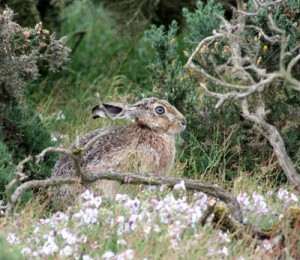
“We head south into weak sunshine poured through a washed out sky, up and down banks of pink thrift and close cropped turf. The shingle protests underfoot. Threadbare hares eyeball us from a distance. An old drum, a reel of wire, land scooped out in dips, mounds and barren mudflats. As we approach the gull colony, lesser black backed and herring gulls greet us with a crescendo of raucous cries. Walking into the colony gulls lift up, a clamour of screeches and cries. ‘Yarh yarh yarh’ and the sky is littered grey with birds of all sizes, motes of soot or litter in the wind. I hear the occasional peep of an oystercatcher, then a deeper more gutteral cry as, amongst the whirl overhead, a great black backed gull is mobbed by his smaller cousins.
I look down to see a confusion of loose nests, speckled green eggs and huddles of downy chicks, dotted mud-grey and well camoflaged against the grass and splattered ground. I feel a well of excitment seeing nests with eggs and stoop to pick up a broken eggshell embroidered on the inside with a trellis of red veins. I hurry to catch up with Anthony who is fast tracking it through the haze of gulls. They swoop in big arches, their cries deafening. I think I know when they are going to attack as from a distance they fix their gaze intently and then shape to dive bomb. Anthony braces against the attacks and then I receive a vicious kick on the back of my head. I feel the sharpness of feet and beak and know that blood has been drawn. I put up my hood just as a missile of guano splatters my sleeve with chalk white smears.
Through more waves of thrift we reach the hide, out of the wind and into the smell of damp wood and dust. Inside, safe from the birds, I recall fragments of a dream and sit gazing blankly at the mudflats while Anthony latches open a window and sets up the telescope. I am in an alien land wearing a pink gingham dress the colour of pink thrift. The dress is one I wore when I was twelve. I mingle with a group of people I am trying to please but feel awkward and distant from them. I remember the feeling of being caught between people and a wild, other self of tree climbing, birds’ nests and wanderings alone over the Downs. The dream and memories are rosy with sunset light, the same as last night at sundown over the mudflats and thrift. Pink thrift stirs pink memories.
Later that day we move heavy sheets of plastic guttering into the garage where the barn owl is supposed to live in a boarded up corner. Weary but relieved that the task is done, I notice a couple of soggy owl pellets near the garage entrance, the round, dark remains of a barn owl meal. We prise them apart and find fine vole bones. There are no signs of life in the garage. Then I discover a barn owl behind the cabins, a hollow eyed carcass leached of life, soggy feathers fanned out white against the black bins. I am reminded of how harsh it is here.
Anthony finds a rat skull in the gloom near the decaying remains of a hare and I discover the bleached jawbone of a seabird, slender and springy as a wish bone. On returning to my cabin, I secrete it safely away with my eggshell inside an empty egg-box.”
I’ve had a yearning for a faded sort of beauty. Wanting to satisfy my need, I googled angels, caves and frescos and found two roman frescos from Italy that I particularly like. One is of a Winged Figure and the other, The Three Graces.
It’s the ethereal beauty of the frescos that I like, somewhat wabi sabi?
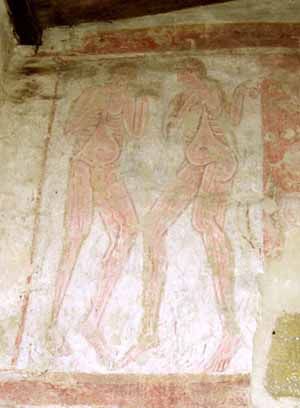
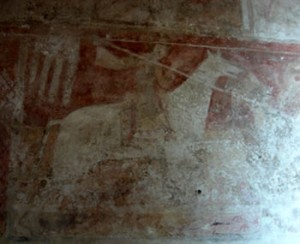
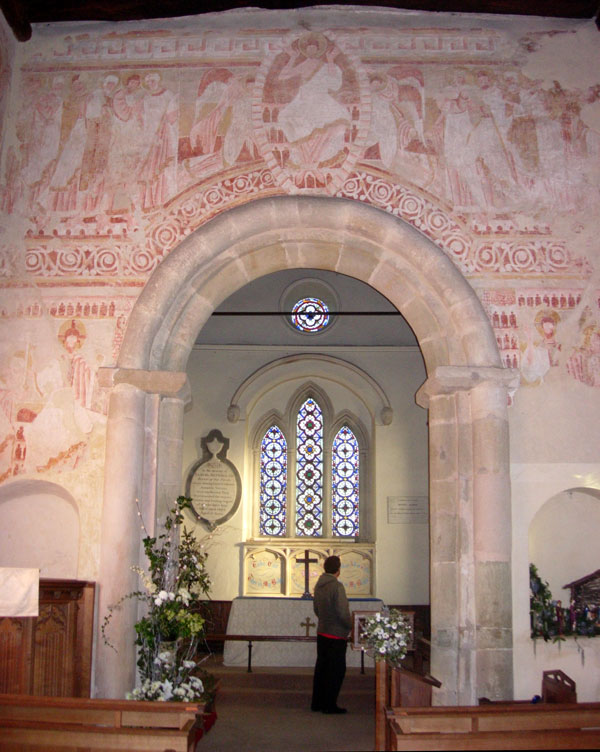
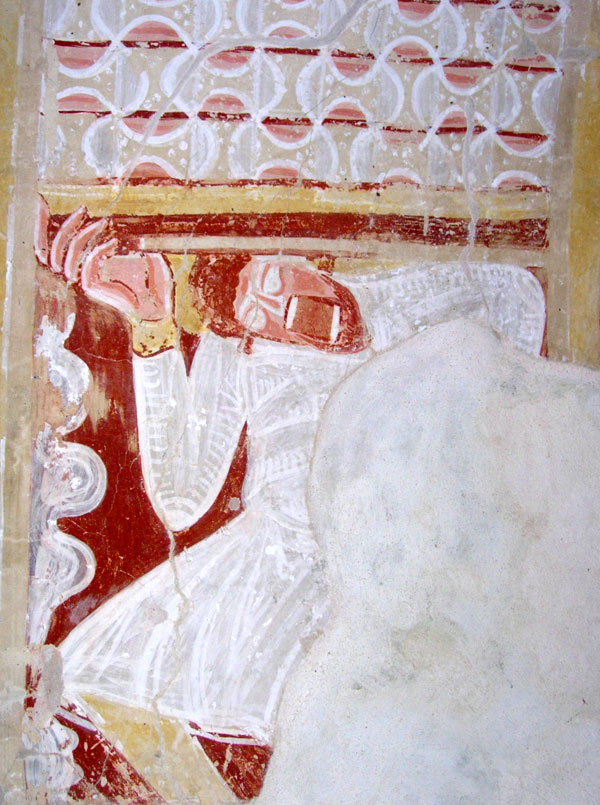
But there are frescos closer to home, one in a church just down the road, St Peter’s in Preston Park. There are several other medieval churches close to Brighton that have well kept twelfth century wall paintings, these are at Clayton, Coombes and Hardham. Recently, I visited them and took photos.
Adam and Eve wall painting at St Botolph’s Church, HardhamSt George fresco, St Botolph’s Church, Hardham.
I love the red ochre used in the wall paintings, it reminds me of cave paintings. Some of these walls have faded ghosts: here’s St George fighting the infidel – an apparition supposedly seen at the Battle of Antioch in 1098. Also Adam and Eve, looking a bit raw. The walls must have witnessed countless people over the centuries pondering in the pews.
Below are photos showing Christ in Majesty over the chancel of Clayton church and a humerous painting of a man holding up the arch at Coombes church.
Clayton ChurchFresco in Coombes Church
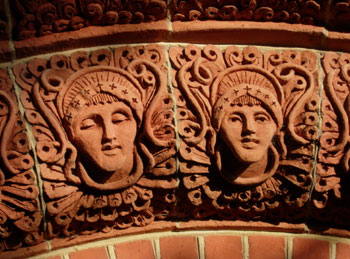
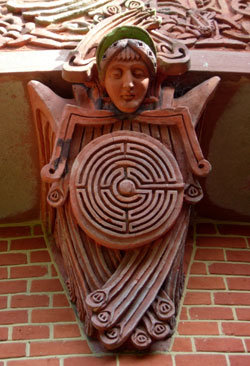
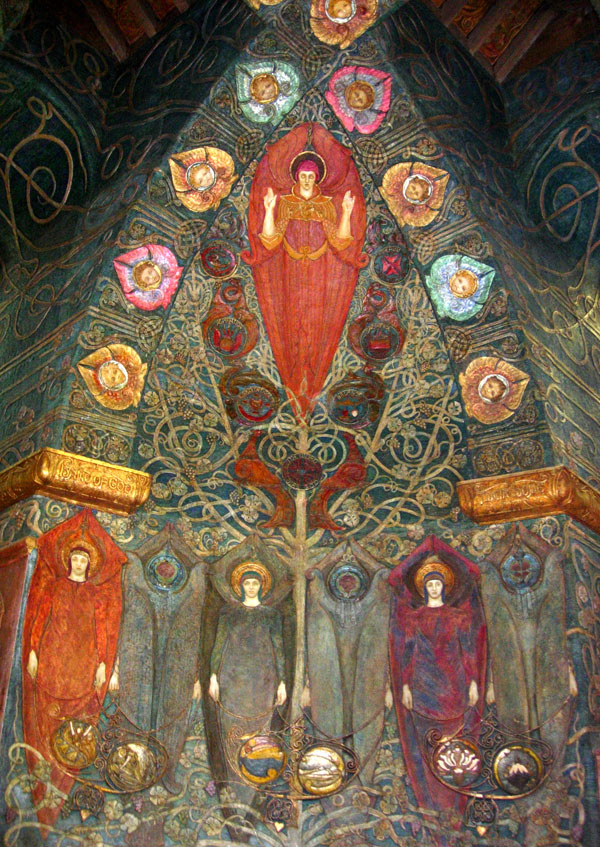
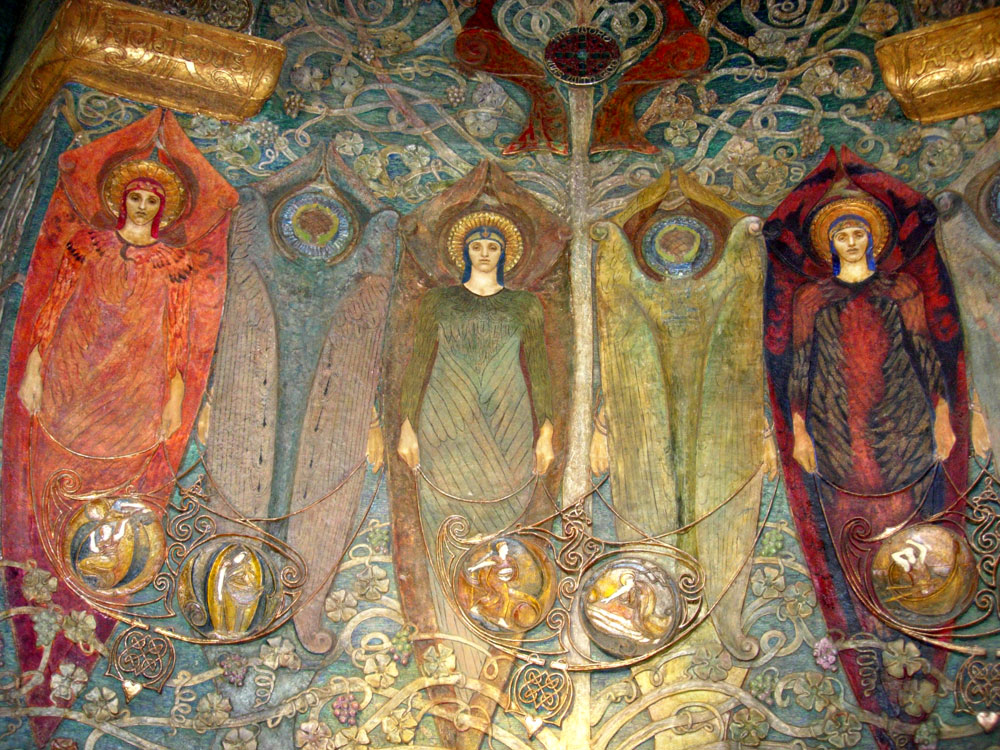
In the mood for church art, I made a trip to Watts Chapel in Compton, Surrey. It is a gem of a place. Designed in the nineteenth century by Mary Watts, the wife of George Frederic Watts, a well known Victorian artist, the chapel is of many styles including Art Nouveau, Celtic, Romanesque and Egyptian. It is shaped like a Byzantine Greek Cross and features many decorative mouldings and friezes.
Watts Chapel Tree of LifeWatts Chapel angels inside.
The whole chapel is embelished with symbolism; birds, flying fish, boats, shells, bells, cherubs etc. The River of Life and The Tree of Life – symbols I love – feature inside and out. Over the entrance arch there are alternating faces; some look up in hope and others down, in sympathy. One of my photos here shows a corbel with a labyrinth that symbolises The Way, which is taken from the saying of Jesus, “I am the way, the truth and the life” (St John 14:6). Venturing inside the chapel is like entering a hidden, secret garden, where one is surrounded by angels or winged messengers. Some of the angels face outwards “carrying the symbol of light” while others face inwards “carrying the symbol of darkness”. I love the intricate vegetation of The Tree of Life weaving a mystical garment out of the whole. Click on the small photo of the chapel interior to see a larger version.
After all this, I couldn’t help thinking about the film, The English Patient and the scene in which the soldier Kip takes Hana to a cathedral and shows her the frescos there. Here it is:
 Both artists were exploring perception and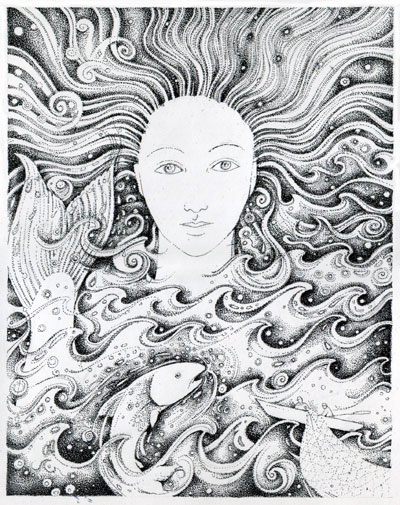
 A stay on Havergate Island off the Suffolk Coast in June inspired this piece of creative writing:
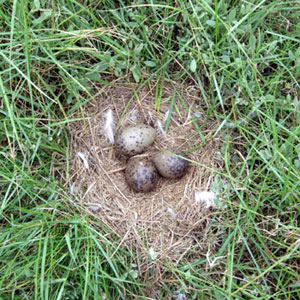 I look down to see a confusion of loose nests, speckled green eggs and huddles of downy chicks, dotted mud-grey and well camoflaged against the grass and splattered ground. I feel a well of excitment seeing nests with eggs and stoop to pick up a broken eggshell embroidered on the inside with a trellis of red veins. I hurry to catch up with Anthony who is fast tracking it through the haze of gulls. They swoop in big arches, their cries deafening. I think I know when they are going to attack as from a distance they fix their gaze intently and then shape to dive bomb. Anthony braces against the attacks and then I receive a vicious kick on the back of my head. I feel the sharpness of feet and beak and know that blood has been drawn. I put up my hood just as a missile of guano splatters my sleeve with chalk white smears.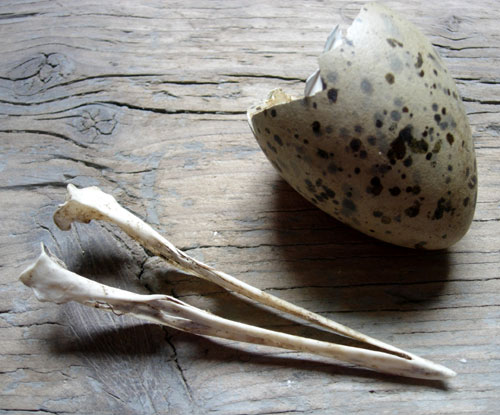
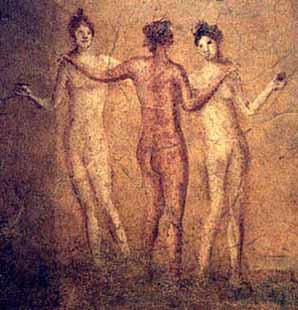
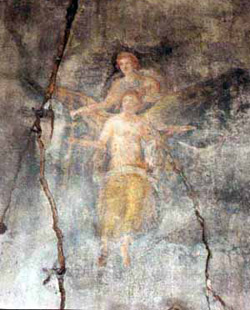 I’ve had a yearning for a faded sort of beauty. Wanting to satisfy my need, I googled angels, caves and frescos and found two roman frescos from Italy that I particularly like. One is of a Winged Figure and the other, The Three Graces.